Gothic Revival Cottages: Steep Gables and Board-and-Batten Charm
A Gothic Revival cottage is a mid-1800s American house style with steep pointed gables, lacy carved trim along the roof edges called bargeboards or gingerbread, pointed-arch windows and often vertical board-and-batten siding. It was popular from about 1840 to 1880, and it looks like something out of a storybook. We think it is one of the most romantic old-house styles, and it is easy to recognize.

| Popular | About 1840 to 1880 |
| Where common | Northeast and Midwest, rural towns and river valleys |
| Signature features | Steep gables, carved bargeboards, pointed-arch windows, board-and-batten siding |
| Sub-type | Carpenter Gothic (wood versions with jigsaw trim) |
| Related styles | Italianate, Folk Victorian, Queen Anne |
Where the style came from
Gothic Revival began in England as a romantic revival of medieval church architecture. In America, architect Alexander Jackson Davis designed Gothic villas in the 1830s, and his friend Andrew Jackson Downing spread the idea in popular books like Cottage Residences (1842).
Downing argued that houses should blend into the landscape and that steep roofs and vertical lines suited the American countryside.

Carpenter Gothic
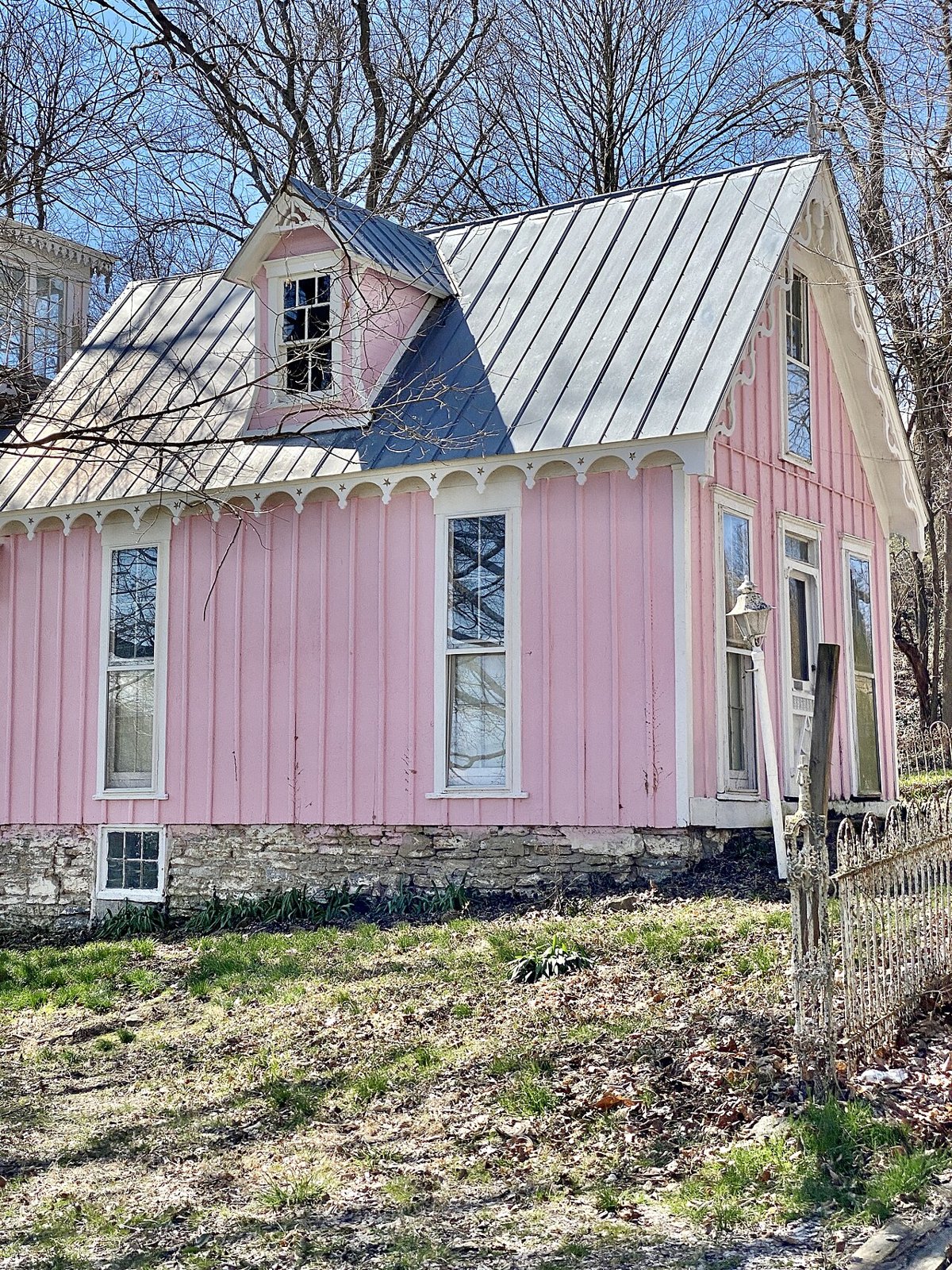
In stone, Gothic was expensive. But the scroll saw, or jigsaw, let carpenters cut elaborate wooden trim cheaply, and that gave us Carpenter Gothic: wood cottages with lace-like trim on every gable.

How to spot a Gothic Revival house
- Steep gables: often a large center gable on the front.
- Bargeboards: carved or cut-out trim along the gable edges.
- Pointed-arch windows: sometimes with diamond panes or drip moldings above.
- Board-and-batten siding: wide vertical boards with thin strips covering the seams.
- Finials and pendants: pointed decorations at gable peaks.
- One-story porches: with flattened arches or delicate posts.
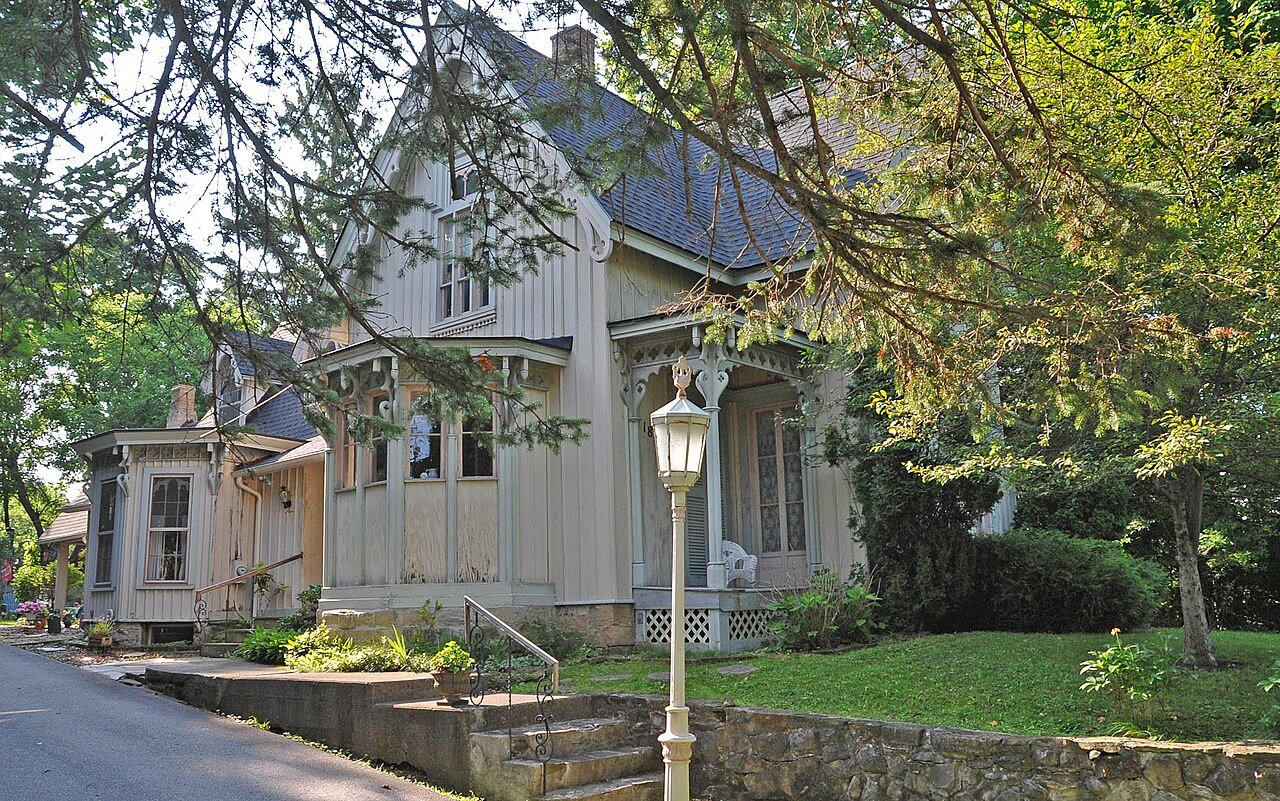

The rural Gothic farmhouse
Many farmhouses across the Northeast and Midwest got a single steep center gable on the front, often with a pointed window. It is a simple, common echo of the style.


Gothic Revival vs. similar styles
- Gothic vs. Queen Anne: Queen Anne houses have towers, wraparound porches and shingle patterns; Gothic cottages focus on steep gables and bargeboards.
- Gothic vs. Folk Victorian: Folk Victorian adds spindle trim to simple shapes without pointed windows.
- Gothic vs. Tudor Revival: Tudor houses use half-timbering and brick; Gothic cottages use wood trim and board-and-batten.
Buying a Gothic Revival house
- Bargeboards: thin carved wood weathers fast; check for rot and missing pieces.
- Steep roofs: valleys and flashing need regular care.
- Board-and-batten: check battens for gaps and water damage.
- Pointed windows: custom shapes make replacement costly, so restoration is often best.
See it among every classic style in our American house styles guide.
Frequently asked questions
What is Carpenter Gothic?
A wood version of Gothic Revival, decorated with jigsaw-cut trim, common in American towns from the 1840s to the 1880s.
What are bargeboards?
Decorative boards along the edges of a gable roof, often carved or cut into lacy patterns.
When were Gothic Revival houses built?
Mostly from about 1840 to 1880.
What is the famous American Gothic house?
The small Carpenter Gothic house in Eldon, Iowa, that appears in Grant Wood’s 1930 painting American Gothic.